
FITNESS TESTS: REQUIREMENTS, TRAINING TIPS AND HOW TO PREPARE
- Admin
- Mar 31
- 7 min read

If you’re an aspiring paramedic, police officer or firefighter, or someone attempting to break into a specialist group, your first hurdle will typically be some form of a fitness test. From beep tests and push ups to elaborate obstacle courses and occupation specific tasks, almost every jurisdiction in Australia will require their first responders to pass a fitness test at some stage of their career.
Fitness tests will always be a point of contention, and the questions are always the same. Why does every jurisdiction have a different test? If you have to pass a fitness test to get into the job, why doesn’t every jurisdiction require mandatory ongoing fitness testing? And what’s the point of fitness testing in the first place?
Why Fitness Tests Matter for First Responders
Ensures Safe Completion of Common Tasks
Fitness tests might be implemented for a number of reasons. The most common is to ensure the individual possesses the physical qualities to safely perform tasks regularly required within the role they’re applying to. For example, if you are applying to a police service, do you have the aerobic capacity to run distances frequently required in the job? Do you have a sufficient level of upper body and grip strength to handle arrests? Can you change direction quickly when pursuing an offender on foot?
Common police fitness tests include the beep test, push ups, hand grip strength and some form of agility test because they answer those questions. If you’re able to pass to the required standard, chances are you’ll be able to perform the tasks successfully and with little injury risk. For that same reason, many Australian police officers are required to pass some form of swim test because ensuring officers can swim is crucial to their safety in a country with such a strong beach culture.
Many emergency services are moving towards some form for Physical Ability Test (PAT) which is a simulation of job roles using real equipment in controlled environments. For example, the Tasmania Fire Service run a PAT that includes a Road Crash Rescue, a Confined Space task, a Tower Climb, a Hose Drag and a Firefighter Rescue, all of which are designed to emulate real-world scenarios.
First and foremost, fitness testing is necessary because it helps to ensure the safety of the individual - research has regularly proven that higher beep test scores correlate to lower injury risks in police and military recruits. This is also why more physical specialist roles will typically have higher fitness standards – as the injury risk associated with the role increases, so too do the fitness requirements.
Identifies Pre-existing Heath Risks
The nature of work conducted by first responders can impose significant health risks due to prolonged stress exposure, poor sleep schedules and inconsistent nutrition and activity levels among other things. With all that considered, the emergency services are not looking to expose someone with significant pre-existing health concerns to a role that will further increase their risk.
Firefighters will typically undertake lung capacity assessments because entering the role with an identified health issue relating to the lungs or wider respiratory system could be an issue considering the risks associated with firefighting. Similarly, blood pressure and cardiovascular burden are often considered in the testing of emergency service applicants for the same reason.
Allows Applicants to be Graded Against One Another
Fitness tests can be a means of ranking potential applicants against one another. This is typically more common when testing for specialist or elite groups where the selection process is far more cut throat, but even in general applications for police or fire service members, these scores are considered among the other information in the application process when selecting successful candidates.
This is why training to the minimum standard of a fitness test is rarely a good idea. Some jurisdictions will use PAT completion times, or fitness test scores to rank candidates, particularly if the course has limited spaces. While the minimum beep test standard may be 5.01, someone who achieves a score of 10.01 could be considered more suitable for the role if all else is equal.
Australian Police Fitness Tests by State
STATE | TYPE | TESTS |
Victoria | Battery | Beep Test, Grip Test, Illinois Agility Test, Push Ups, Prone Bridge & 100m Swim |
New South Wales | Battery | Beep Test, Grip Test, Illinois Agility Test, Push Ups, Prone Bridge & Vertical Jump |
Queensland | Battery | Beep Test, Push Ups, Prone Bridge & 100m Swim |
Northern Territory | Battery | Beep Test, Push Ups, Prone Bridge, 100m Swim & Farmer’s Carry |
Western Australia | Battery | Beep Test, Grip Test, Modified Illinois Agility Test, Push Ups, Sit Up Test & Bag Lift and Carry |
South Australia | PAT | |
Tasmania | Battery | Beep Test, Grip Test, Illinois Agility Test, Hand Release Press, Prone Bridge & Broad Jump |
Australian Fire Service Fitness Tests by State
STATE | TYPE | TESTS |
Victoria | PAT | Ladder Raise, Ladder Extension, Stair Climb, Container Haul, Visual Recognition, Chain Cutting and Descent, Hose Pull, Equipment Lift and Carry, Hose Couplings & Crew Rescue |
New South Wales | PAT | Reduced Visibility Search, Ladder Simulation, Single Sided Carry, Stair Climb, Rescue Tools, Hose Drag, Fire Attack Simulation & Firefighter Rescue |
Queensland | PAT | |
Northern Territory | PAT | Beep Test, Reduced Visibility Search, Single Sided Carry, Stair Climb, Rescue Tools, Hose Drag, Fire Attack Simulation & Firefighter Rescue |
Western Australia | PAT | Beep Test, Tunnel Crawl, Ladder Climb, Equipment Haul, Loaded Stair Climb, Simulated Rescue, Equipment Handling & Heavy Tool Lift |
South Australia | PAT | Beep Test, Ladder Climb, Tunnel Crawl, Casualty Rescue, Ceiling Breach and Pull, Ladder Raise, Tower Climb, Container Haul, Forcible Entry, Hose Drag, Equipment Carry & Encapsulated Suit |
Tasmania | PAT | Beep Test, Road Crash Rescue, Confined Space, Agility Assessment, Tower Climb, Hose Drag & Firefighter Rescue |
Training for Emergency Service Fitness Tests: The Dos and Do Nots
DO – Familiarise Yourself with the Fitness Test and Movement Standards
The tests used by each jurisdiction and service might be completely different, but even the ones they have in common may differ slightly from one to another. For example, Victoria Police and WA Police require push ups to be completed from the toes and consecutively with no pause in between, while NSW Police allow the applicant to choose between the toes or knees. Queensland Police require reps completed to a 2-second cadence, while Tasmania use a hand-release variation to a 3-second cadence.
Knowing the movement standards and variations used in your test is crucial, as there may be a learning curve associated with the movement and you want to ensure you have perfect technique come testing day.
DO – Establish a Realistic Timeframe and Start Training Early.
You want to start training well in advance of your testing date. If you have a lot of work to do, give yourself a realistic window so that you can make meaningful progress before you’re thrown into the test. A month or two might seem like a long time, but depending on your fitness level and background, it could take up to six months to get to a point where you’re 100% confident of your ability to pass, so plan ahead.
Once you have your time frame established, schedule some practice tests at regular intervals. Initially, this might be every four to six weeks, or if you’re on a longer timeframe it might be every couple of months. As you approach that official testing day, it might become more frequent to build your confidence. Ensure you always complete the entire testing battery in the same order that they’ll be completed on the day.
If your test is a PAT, get in touch with the service you’re applying to and see if they offer practice testing days. If not, build your own test that measures similar qualities. This might require engaging with an S&C professional.
DO NOT – Use the Fitness Test as Your Training Program
Think back to your school days. A teacher will teach a topic in its entirety, and the exam will cover a fraction of the learned content. If a teacher teaches only what’s covered by the exam, the student may test well but they have not learned a heap of information that they might require later in life.
A fitness test should be treated the same way. You want to make sure that your training sets you up for any task you might be required to complete in that role and as a byproduct, you’ll address what’s required by the fitness test.
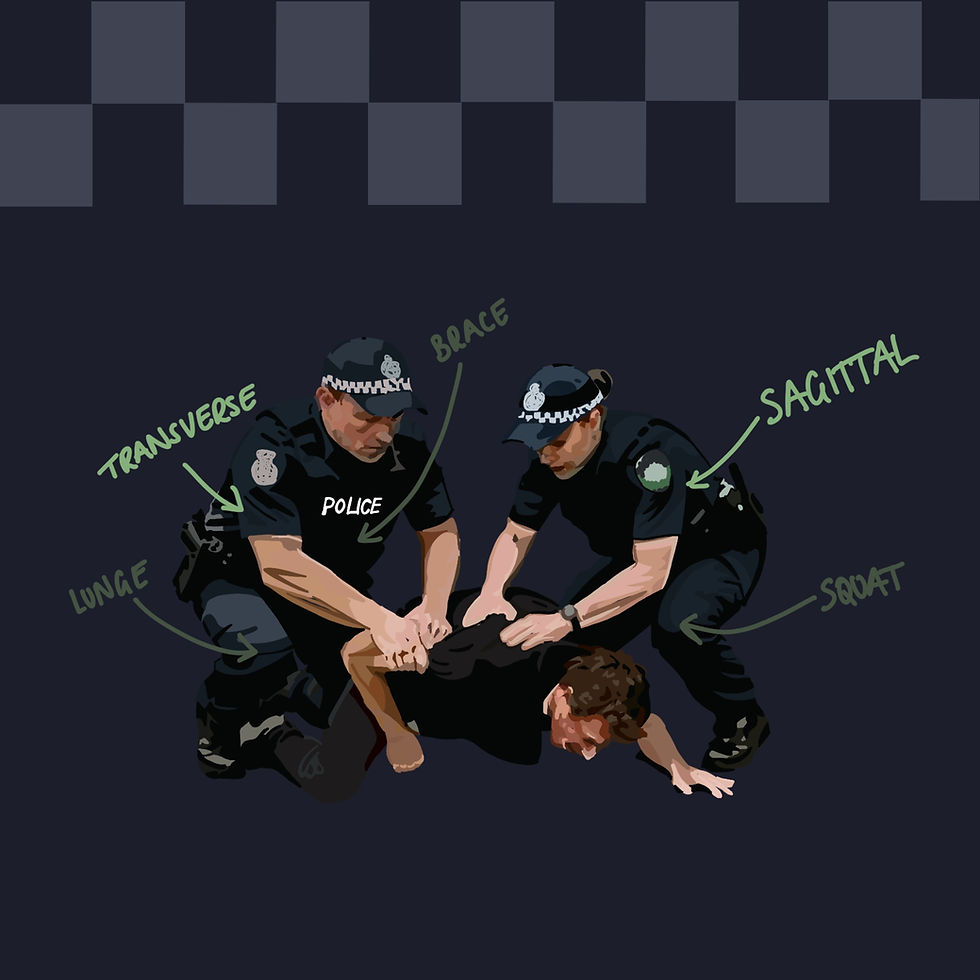
This rings especially true for PATs where the test is difficult to replicate in a training environment. A Tasmania Fire Service applicant can’t go to the gym and complete three sets of a road crash rescue, but they can do deadlifts, lunges and isometric holds which will translate to the required task.
For more information on how to identify exercises that will apply to a given task, read our Classifying Movements article.
DO NOT – Train to the Minimum Standard
You might be at the stage where you’re just meeting the minimum standard in every practice test, but the energy you’ll expend due to nerves, anxiety and stress come your official testing day could leave you falling short when it’s all on the line.
You want to get to a point where you have a comfortable buffer between your regular score in training and the minimum standard so that nothing is left to chance. Your aim on testing day should not be to scrape by, but to make the assessors take notice by achieving scores that highlight you as a solid candidate.
DO – Change Your Training Focus Over Time to Address Problem Areas.
Regular practice tests are a chance to evaluate how successful your training has been going to date. If you find there’s one test in which you’re struggling to improve, adjust your training to increase the focus on the required qualities.
Take the beep test for example. It’s a test that people often get stuck on, so if you’re not progressing how you’d hoped between your first and second practice test, you might need to ramp up the running and develop some more change of direction or lateral lower body strength. Being flexible enough to accommodate this in your training moving forward will be the difference between making meaningful progress or treading water.
Training Plans
Many emergency services provide programs for future applicants to help them with their training in the lead up to their testing day. Keep in mind, these programs are extremely basic and cater towards people with very limit training backgrounds. For a more detailed approach to training for your fitness test, reach out to us at AusTac S&C via the ‘Got a question?’ tab on our homepage.

Comments